Google Ads in AI Mode: What Businesses Need to Know
Google is testing new ad formats inside AI Mode. Learn how existing campaigns qualify, what the reports show, and what to check if you advertise from Thailand.
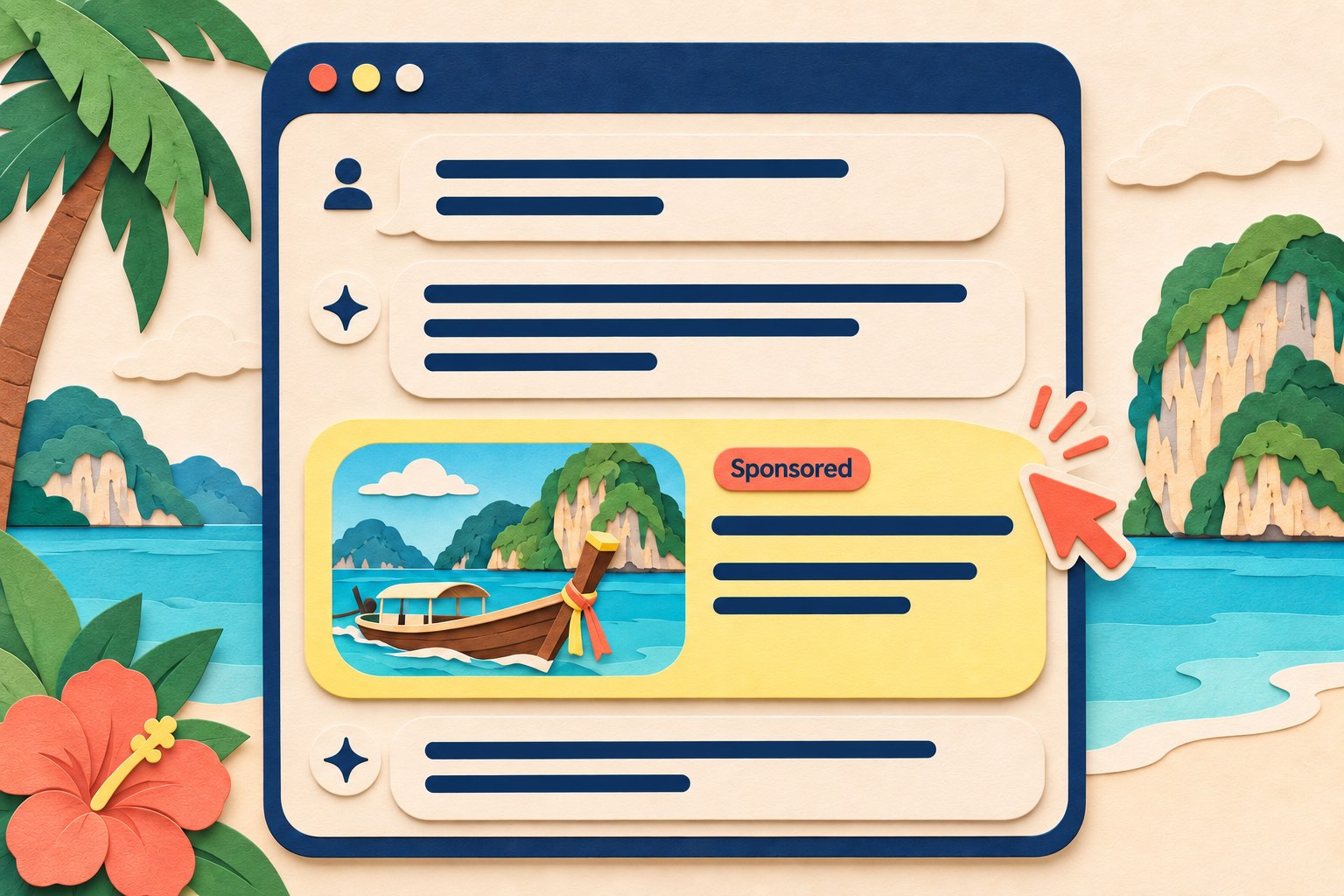
Imagine a traveller asking Google for a Phuket boat trip that works for young children and includes pickup from Kata. In AI Mode, they can follow up with a budget or a date. When the conversation points towards a purchase or booking, Google can show a relevant sponsored option within or alongside its answer.
Google’s 2026 announcement describes tests of more visual ad formats that use Gemini to explain how an offer fits a question. For businesses already running Google Ads, the immediate change is where an eligible ad can appear. Google’s Ads in AI Mode announcement.
What an ad can look like in AI Mode
AI Mode is the conversational part of Google Search. AI Overviews are the shorter summaries that can appear on the regular results page. Google can show text or Shopping ads in these experiences and marks paid placements as Sponsored. Google generates the organic answer independently of the ads.
In some layouts, Gemini adds a short explanation next to an ad or group of ads. It can draw on the question, Google’s answer and public sources such as your website. Google treats this as its own explanation. Advertisers manage their ad assets but cannot edit or approve that explanation. Google Ads Help on ad layouts and explainers.
Do you need a new campaign?
Eligible Search, Shopping and Performance Max campaigns can enter the existing auction without a separate campaign or budget. Search ads using exact or phrase match can qualify when the query shows direct buying intent. Options such as AI Max for Search or broad match can also qualify for matches based on the context of an exploratory question and the AI answer. Eligibility gives an ad a chance to appear, subject to the auction and availability. Google’s campaign eligibility and matching rules.
What this means if you advertise from Thailand
As of 12 November 2026, Google’s published list for ads inside AI Mode covers English in selected markets, including the US, Australia and Singapore. Thailand is absent from that list, which Google says may be incomplete as it expands coverage. A Phuket operator advertising to travellers in an eligible market should check that audience’s location and language. The location of the business alone tells you little about where its ad may serve. Google’s list of locations and languages.
What can you measure?
Google includes AI Mode activity in aggregate campaign and search term reporting. Campaign totals can tell you how much you spent and how many conversions you recorded. They do not tell you how many bookings came specifically from AI Mode. Google also says advertisers cannot target AI Mode on its own or opt out of that placement separately. Google’s reporting and placement controls.
Start with the page customers will land on
For the Phuket tour example, send visitors to a page that shows pickup areas, age restrictions, departure times and what the price includes. Keep that information consistent across the page and the booking form. If an advertised price applies only on certain dates, show the dates next to the price.
Before widening your targeting, test the booking or enquiry on a phone and confirm that a completed action reaches both your team and your conversion reports. Use the quality and cost of those enquiries or bookings to judge campaign changes.
Frequently asked questions
Can I run Google Ads only in AI Mode?
Google currently includes AI Mode in eligible Search placements. It does not offer a standalone AI Mode campaign or a separate placement opt-out.
Do paid ads change Google’s AI answers?
Google says it generates organic AI answers independently. Paid placements carry a Sponsored label.