Hiring a Website Company in Thailand: From Brief to Handover
Turn a vague website request into clear deliverables. Use this practical brief, acceptance, and handover checklist when hiring a website company in Thailand.

When you hire a website company in Thailand, a clear brief protects both your business and the delivery team. The most useful starting question is not “How many pages can we get?” It is “What should customers be able to do when this website is finished?”
Whether you need a service website, a bilingual portfolio, or an ecommerce website, define the outcome before asking for a proposal. The checklist below follows the project from the first conversation to the point where your team takes control.
Write a one-page business brief
Describe the business, target customers, main services or products, and the action visitors should take. Identify the current problem in observable terms. “Visitors cannot find delivery information” is more useful than “the website feels old.”
List required languages and features, plus any existing tools the site must connect to. Add the target launch date and who can approve work. Explain what success will be measured against, without assuming the website alone can guarantee sales or search rankings.
Make the content responsibilities visible
Confirm who supplies the logo, photography, service details, product data, translations, and policy text. Mark each item as ready, needing revision, or not yet available. Assign an owner and review date.
For a Thai and English website, ask whether the scope includes actual translation or only the technical language setup. Agree how both versions will be reviewed, including form labels, confirmation messages, and search descriptions.
Ask for named deliverables and review stages
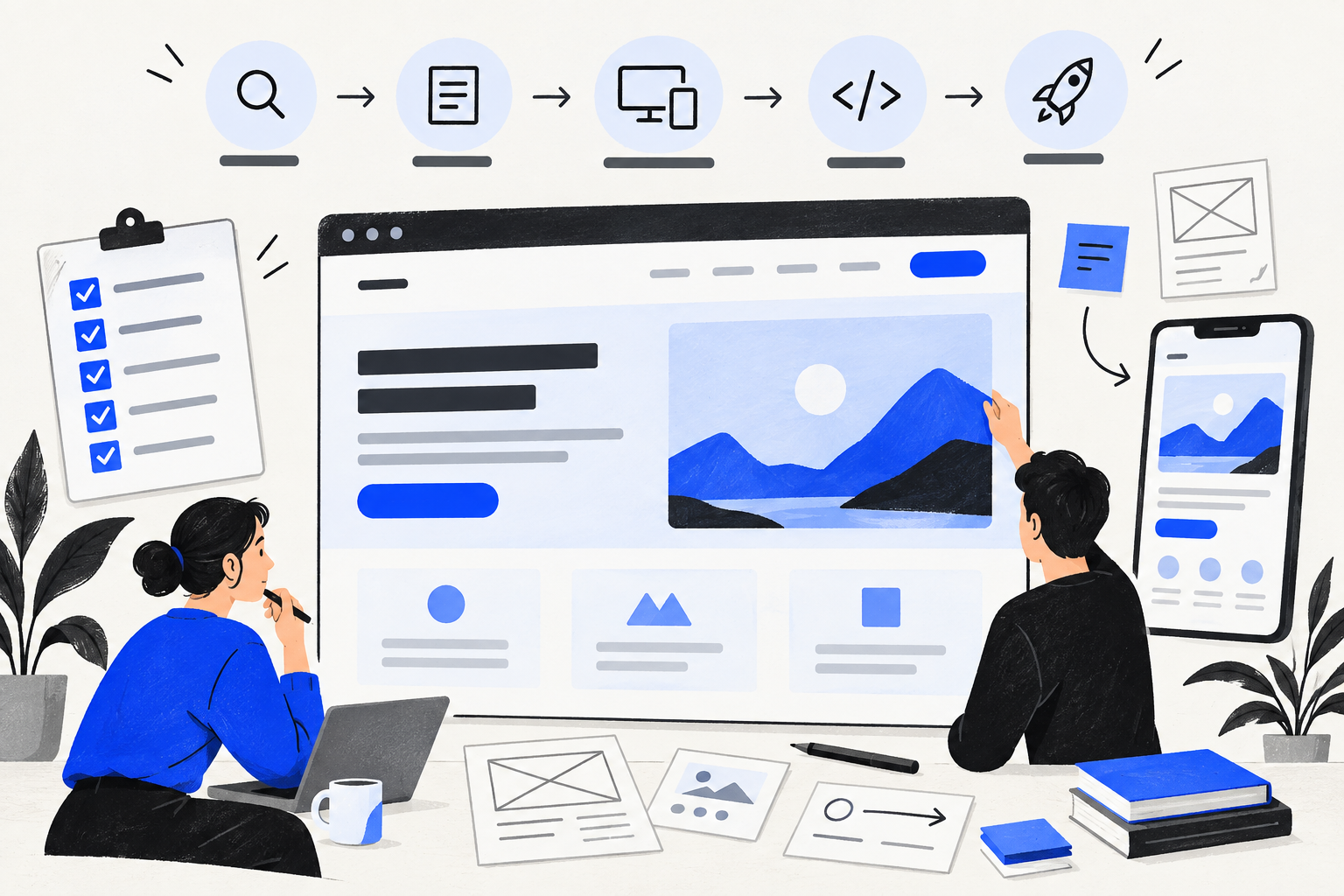
A useful website development proposal identifies the sitemap, page types, design review, build, testing, and handover. It also explains feedback rounds and how additional requests are priced.
Ask whether the build uses a website builder, WordPress with Elementor, another CMS, or custom development. The answer should connect to your editing and integration needs. Request a demonstration of a comparable editing task rather than choosing on a platform label alone.
Agree on acceptance tests before launch
- Enquiries: submit forms and confirm messages reach the right person.
- Mobile: try navigation, calls, and the main customer action on a phone.
- Languages: check that switching language preserves useful page context.
- Content: inspect real headings, images, links, and contact details.
- Commerce: if relevant, test products, delivery, checkout, and order messages safely.
- Editing: have your own team complete a routine update.
Record unresolved issues in one shared list with owners. Separate launch-blocking defects from future enhancements so both parties understand what acceptance means.
Take ownership of accounts and ongoing work
Document who controls the domain, hosting, website administration, analytics, and connected services. Agree which accounts should be registered to the business, what access the supplier retains, and how access can be revoked securely.
Request a record of recurring costs, backups, update responsibilities, and any deliverable files included in the contract. Clarify the difference between a launch defect, maintenance, and a new feature. Knowing who handles each situation is more useful than a vague promise of support.
Use our website quote comparison guide to compare matching scopes. When your brief is ready, send it to END so we can discuss a practical delivery plan.
Frequently asked questions
What should I prepare before hiring a website company?
Prepare your business goal, customer audience, main action, required languages and features, existing assets, content owners, and target date. A short clear brief is enough to start a useful discussion.
Should the business own the domain and website accounts?
Agree ownership and access explicitly in the contract. Identify the business-controlled accounts, supplier access, recurring subscriptions, and handover steps before work begins.
How do I know a website is ready for handover?
Check the agreed deliverables and acceptance tests, review outstanding issues, complete a routine edit, and verify account access, documentation, backups, and support responsibilities.