Website Design vs Website Development: What Your Business Needs
Understand what website design and website development each deliver, how they work together, and what to include in your next website brief.
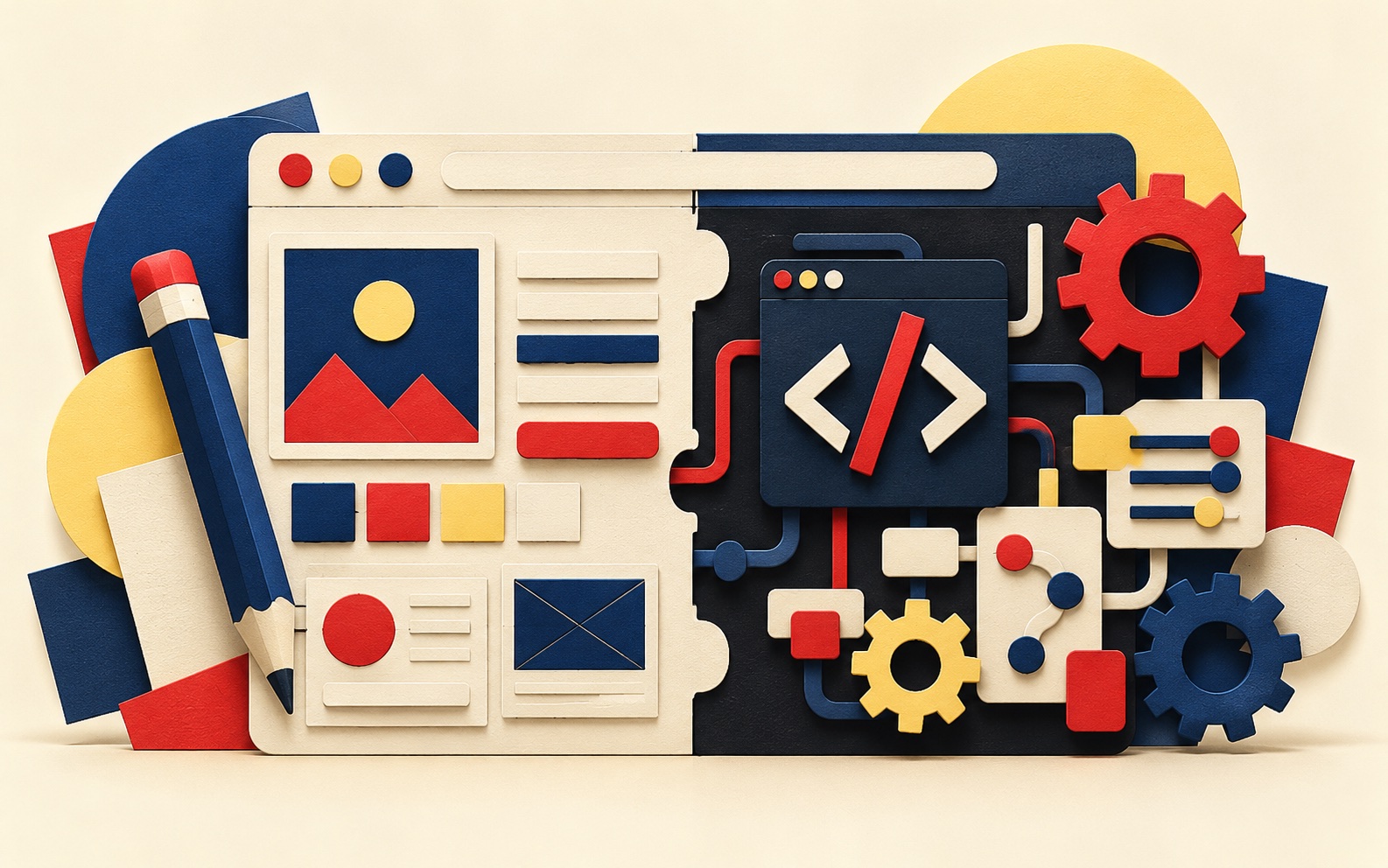
Website design defines how a website communicates and how people use it. Website development turns that plan into a working system. Most business websites need both, even when one person or one agency handles the whole project.
Knowing the difference helps you compare proposals and explain what needs improving. A site with confusing navigation needs a different starting point from a site with broken forms or unreliable integrations.
What website design includes
Design starts with the audience, the information they need, and the action the business wants to support. It can include research, content structure, user journeys, wireframes, visual layouts, and interaction states.
The visual layer brings brand identity into the experience through typography, colour, imagery, and spacing. But a complete design also explains what happens when a form fails, a product is unavailable, a title is unusually long, or the visitor uses a small screen.
For example, a hotel room page should help someone compare occupancy, facilities, location, and booking terms. A large photo may attract attention, but the page still needs to answer those practical questions before asking for a reservation.
What website development includes
Development covers the code and platform configuration that make the experience function. Front-end work controls the browser interface. Back-end work handles server logic, data, permissions, and integrations where needed. A builder or CMS may already supply some of these functions.
A development scope should identify the CMS, forms, data connections, hosting setup, redirects, analytics, and publishing workflow. It should also explain how the team will test accessibility, mobile layouts, performance, security, and failure states.
The handover matters. Your team should know how to update content, who owns the accounts, where backups live, and who responds if a form or booking connection stops working.
How to tell which problem you have
- Visitors cannot understand the offer: review positioning, content hierarchy, and page design.
- People find the form but cannot submit it: inspect validation, server behaviour, and email delivery.
- Pages feel slow: investigate image sizes, scripts, hosting, and layout before assigning a cause.
- Mobile visitors abandon a task: test the full journey, since the cause may involve design, content, or development.
- Editors avoid updating the site: review CMS structure and editing experience alongside technical training.
Use observations rather than assumptions. A recorded error, a failed test submission, or feedback from a customer is more useful than “the website looks old.”
Plan the work as one connected process
Designers and developers should review constraints early. A booking integration may affect page structure. A design decision may affect load time. An editor's needs may change the CMS fields. These decisions become harder to resolve after a visual design has already been approved in isolation.
Agree on measurable acceptance conditions: a visitor can find a service on mobile, a valid enquiry reaches the right inbox, and an editor can publish an update without changing code. Test the finished site against these conditions before launch.
What to include in your website brief
List the audience, primary goal, required pages, languages, content owners, integrations, launch constraints, and maintenance responsibility. Ask suppliers to state what discovery, design, development, testing, migration, and support include.
Our website design service and website development service address these connected needs. If you are preparing a rebuild, use the website redesign checklist to organise the decisions before requesting a quote.
Frequently asked questions
What is the difference between website design and website development?
Design defines information, visual presentation, and interactions. Development implements the working interface, platform, data handling, and integrations. The two disciplines overlap during planning and testing.
Do I need a developer if I use a website builder?
Not always. A straightforward site may fit the builder well. Development help becomes useful when you need custom behaviour, integrations, complex data, or technical diagnosis.
Should design or development come first?
Start with goals and content structure, then design and develop in collaboration. Review technical constraints before finalising designs and test real interactions throughout the build.