Why Brand Strategy Should Come Before Logo Design
A strong logo can make a brand recognisable. A clear strategy makes it meaningful, useful, and easier to grow.
A logo is one of the most visible parts of a brand, so it is easy to treat it as the starting point. But a logo cannot decide what your business stands for, who it should matter to, or why someone should choose it. Those decisions belong to brand strategy.
When strategy comes first, design has a job to do. Colour, typography, imagery, language, and digital interactions can all express the same idea. Without that foundation, a logo may look polished while the wider brand still feels inconsistent.
What brand strategy actually defines
Brand strategy is not a long document filled with abstract language. At its best, it is a practical set of choices that helps a team make better decisions. It should clarify:
- the audience you need to reach;
- the problem you solve for them;
- the position you want to own;
- the promise your experience must keep;
- the personality and voice people should recognise.
These choices create useful boundaries. They tell a designer what the identity needs to communicate and give everyone else a shared standard for evaluating the work.
A logo is a signal, not the whole story
A memorable mark can help people identify you quickly, but meaning builds through repetition. It comes from the words on your website, the way a proposal is structured, how support feels, and whether the product delivers what the brand promised.
A logo identifies the brand. Strategy gives people a reason to care about it.
That is why a useful identity is a system rather than a single asset. The logo, type, colour, image direction, motion, and tone of voice should work together across every important touchpoint.
What happens when design starts too early
Without a clear strategic direction, feedback becomes subjective. One person wants the logo to feel premium, another wants playful, and someone else asks for something more modern. Each comment may be reasonable, but there is no shared idea for judging which direction is right.
This often leads to endless revisions or an identity that tries to say everything at once. It can also create a costly gap between the brand and the website when digital decisions begin later.
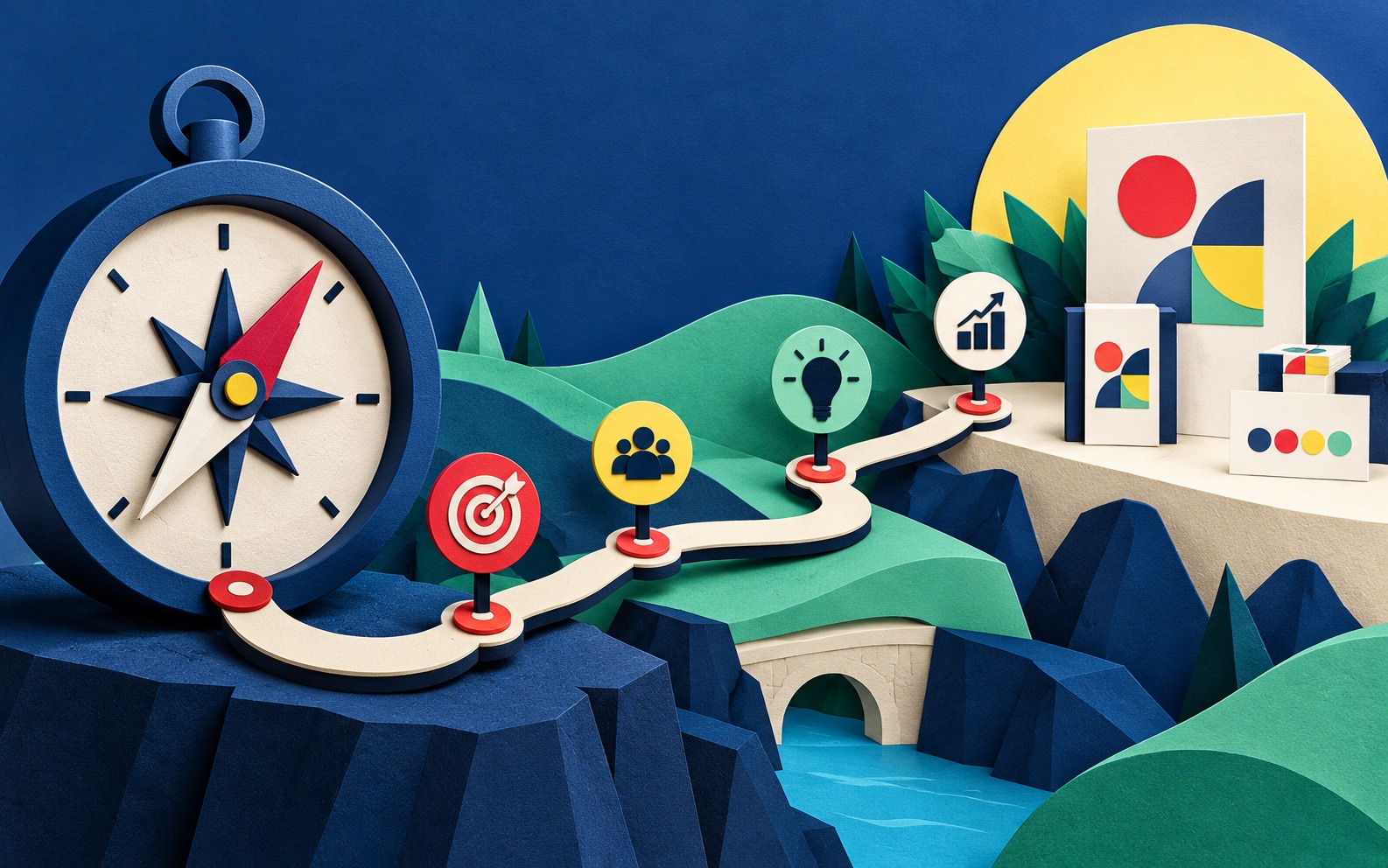
A better order for building a brand
- Understand: research the audience, category, business goals, and current experience.
- Focus: define the real need, positioning, promise, and personality.
- Create: turn that direction into a distinctive verbal and visual identity.
- Apply: test the system across the website and real customer touchpoints.
- Refine: improve what becomes clearer through use.
The process does not need to be slow. Even a focused strategy phase can prevent weeks of circular design feedback and give the identity a stronger, more ownable direction.
The result: a brand that can make decisions
The best brand systems do more than look consistent. They help teams decide what to say, what to make, and what to leave out. Strategy turns identity from decoration into a working business tool, and gives the logo something real to represent.
Frequently asked questions
Do small businesses need brand strategy?
Yes. A focused strategy can be lightweight, but it still helps a small business choose a clear audience, message, and direction before paying for design.
Can we keep our existing logo?
Often, yes. Strategy may show that the current mark still works and that the bigger opportunity is improving the wider identity, messaging, or website experience.
How long does brand strategy take?
It depends on research and stakeholder complexity. A focused project may take a few weeks, while a larger organisation may need a longer discovery and alignment phase.